
RAILS Cataloging Membership Grant Completes the Funding Puzzle for North Pike District Library
- Log in to post comments
The RAILS Cataloging Membership Grant is available to member libraries to support the operations and growth of shared catalog consortia, or Local Library System Automation Programs (LLSAPs). The Catalog Membership Grant aims to increase membership in RAILS LLSAPs by funding startup costs, such as vendor fees and essential technology equipment, for RAILS libraries wishing to join.
This grant fosters resource sharing in the state of Illinois by making library management systems affordable for member libraries. The next deadline for application is April 15, 2026.
North Pike District Library in Griggsville, IL was a 2025 recipient of the grant. They used grant funds to support the membership of their new library branch in RSA.
RAILS Member Engagement Specialist, Jessica Silva, and RAILS Administrative Assistant, Gwen Gemmell, interviewed Kimber Martin, Director of Library Services at North Pike District Library, about her experience as a grant recipient and the lead project manager for their new library building project.
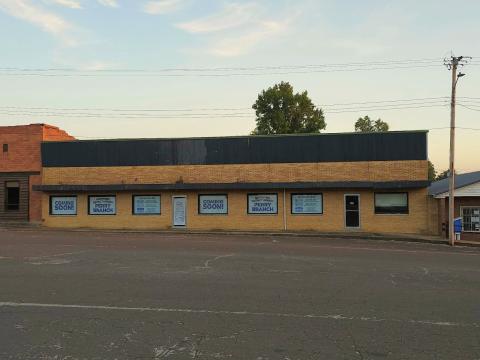
North Pike will open a new location in Perry, IL, to expand their services throughout their library district. The new building is being converted from a cafe and will provide more space for library programming and collections.
Martin gathered funding from a variety of sources and spoke with us about her experience with this expansion and the RAILS Cataloging Membership Grant specifically.
JS: Can you tell us how the RAILS Cataloging Membership Grant supported your overall project?
KM: It made such a difference knowing that we could not have to worry about how we were going to pay to bring a new branch online. When we started looking at the project, we, of course, knew there were going to be additional costs with having a branch. We looked at our finances, we decided we could do it, and that's why we proceeded.
However, just knowing that that little extra chunk of money now can be allocated to something else was a good relief because this project is--you could say it's piece meal as far as funding coming from different sources.
The cataloging grant makes a big difference in those funds that would have had to be used otherwise.
GG: What are the other contributing factors to the overall success of your project?
KM: The project is still in the works. I would say that the commitment to serve our community completely, because we are split between two towns. Our current location, our main location, is here in Griggsville. It has been a district library since 2011. We outgrew this building a long time ago, and when the opportunity came to purchase a building in Perry, it just made so much more sense to add an additional building because then we are going to serve our entire district, versus just one half of it.
I think that the drive to serve our community is what helps to make sure that this is going to be successful.
JS: Why is having an updated database to represent your branches important?
KM: Knowing that we are going to have the most current database in both buildings makes me feel better that our catalog and collection will be able to remain consistent and tracked. It's going to be a new experience having books going back and forth between buildings, having to get holds from Perry over to Griggsville, just those kinds of little things. Knowing that the updated database is there and that we're not working off of the older versions of something or with equipment that's not quite up to par, it makes it a lot less concerning.
GG: What does library service look like now, and what would it look like when you're finished the building project?
KM: Currently, we're just Monday through Friday, the 36 hours a week, and some mornings, some evenings. We have programming here, story hours, a senior citizen social club, and the public computers, books; the typical services at a library. Once the branch is open, we will have so much [more] of the same things there with the books. We'll start another story hour session.
I think that we'll probably see another senior citizen social group come together. We also will have the ability to have larger programs and to provide a room that the community can use whenever they would like.
I have a running list in my head of the different kinds of programs that I can't wait to have. I've wanted to have a puzzle challenge now for years, but I don't have the space to do it in. I'm not saying that I'm making a whole building so I can have a puzzle challenge, but it is definitely on the top of my list of things to do once our community room is up and going.
We also would like to have more of a library of things available. Storage at our current location is at a premium, so we don't have very many items. We have a couple pickleball sets and a couple of disc golf sets. At the branch, we're going to have a pretty good-sized basement that is not very friendly or very pretty, but we would be able to store rakes or shovels or weed eaters or leaf blowers or those kinds of things that take up more space, but that could be helpful in a library of things, especially in a small community.
JS: You recently participated in IHLS’ Third Thursday Continuing Education session. Can you tell me a little bit more about your experience with that and what you’ve been speaking about recently?
KM: Tiffany Holland, who is with West Central Child Care Connection, is the library liaison person for the Tracy Family Foundation. About seven or eight years ago now, the Tracy Family started looking to invest more to grow early childhood and early literacy programs at the local libraries.
Tiffany and I both felt like it was very important that libraries, especially little libraries like ours, know that they can do big things because sometimes you feel lonely and your hands are tied because you're small. In reality, you can do bigger things. It just takes reaching out to your neighbors.
GG: Did you coin the phrase ‘Big Library Energy’? What does bringing that energy mean to you?
KM: To me, I think that it means getting out of that small library mindset and not limiting yourself or what your library can do. I've said already multiple times, we've outgrown our library, we can only do 10 people at a time.
You don't have to say no just because you're small or just because you're a soloish library.
JS: Your library was adopted into the Rotary Club for assistance with the new facility. Can you talk a little bit about this process and how the idea presented itself?
KM: This actually just fell in our laps. My Board President’s sister, is actually a fairly recent Rotary President and also a patron of mine. She knew that we were working on the branch project. The Rotary started talking about trying to get out into Pike County more because a lot of what they do ends up being more focused in the Pittsfield area.
They liked the idea because there was going to be a lot of opportunities for the hands-on work that is a part of their grant requirement, that they have some sweat equity in it. They also have a literacy grant. It tied in nicely with that because they could put them together. I think it's between $1,500 and $2,000 worth of books that they'll be purchasing for us, which is incredible and overwhelming because I don't even know how to start shopping for that.
It's been pretty seamless, but an amazing asset. It's a great partnership, and I'm excited that they're able to branch out farther into the county with their services.
GG: A lot of big changes have occurred in these past few months for your library. How has it felt to be making those large-scale changes? Was there ever a moment where you doubted the success of the project?
KM: It has definitely been a mixed bag of emotions. I would say overwhelming in a lot of ways. I've been able to see it since before we even purchased the building. There's a lot of excitement and anticipation. Some frustration because it's not moving as fast as I would like. I've always considered myself a fairly patient person, but it's really putting it to the test. Whenever people asked me, "When's it going to open?" I'd say last spring because that was my plan.
We were going to be up and going within a year. It just keeps getting scooted back. That is the nature of a project when you are your own project manager, and you're trying to piece things together, and you're a government entity that has to follow certain rules. I'm definitely learning a lot of patience. It's been entertaining because sometimes I just never know what's going to come up next or what to expect. I’m pretty go with the flow in general, so it's definitely teaching me more of that.
I have to think my board wouldn't have supported it if they didn't think it was doable. The Rotary support is huge. The Village of Perry, their support is huge. It helps knowing that there are people on our side.
JS: Can you talk a little bit about the community response for the project or maybe anticipated response to what you all are planning?
KM: It's been really fun. I grew up in Perry. Actually, I can see the back of the branch from my front porch. When it was a restaurant, I was there every morning with coffee for my grandma, and after school every day for coffee with my grandma. I'd have my Pepsi, and she'd have her coffee with all her old lady friends. The restaurant, that building has a special place in my heart. It has a special place in the community's heart. In general, they're so excited to know that there's going to be something happening in town. They're excited about the books piece, of course, and the other programs.
The kids are excited about knowing that there's somewhere to go after school because we have practices that sometimes run late. The kids are excited about that. People ask me pretty much every other day, "When's it going to be open? We're so excited. We're so ready. When you're ready to move books in, let us know. When you're ready to do painting, let us know." It'll probably be the first really new entity in the town in I don't even know how long.
GG: What was it like to work with RSA for the catalog membership grant application?
KM: Working with RSA for the grant application, it was just so easy. I hadn't even heard about it. I get so many emails. I try to make sure I catch all the important ones, but things slip. I'd never seen anything about it. I talked with Antony about something. , and he's like, "Hey, there's this opportunity through [RAILS]. You should apply for it." The application process wasn't any more extensive than any of the other applications I've had to do for things.
Antony helped me figure out some of the money request part of it, like things I could ask for, what to look for, and that kind of thing. Really, it was really great, especially because with other grants that I've been working on, I don't have a person to call to ask them, "What do I need to do differently?" I knew I had that resource with him and with others at RSA, so it was great.
For more information about the RAILS Cataloging Membership Grant, contact Anne Slaughter, RAILS Director of Technology Services.
Thank you to Kimber Martin for her time and assistance on this post.